
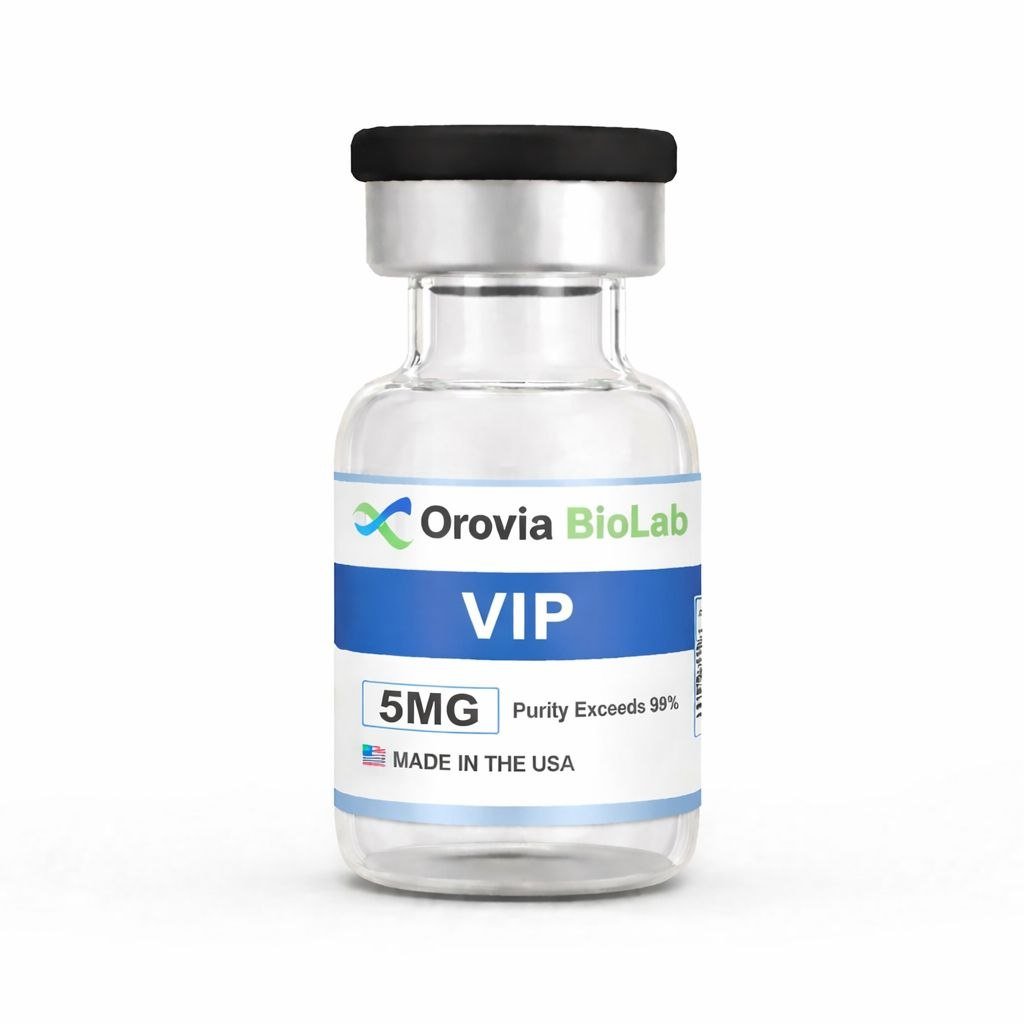
Buy Vasoactive Intestinal Peptide
Made in Bavaria. Enjoyed worldwide.
- Ready to ship within 7 days
- Very large supply
- Container charged freely
Buy Vasoactive Intestinal Peptide Vasoactive Intestinal Peptide (VIP) is a 28-amino-acid neuropeptide belonging to the glucagon/secretin superfamily. It acts as both a neurotransmitter and hormone, widely distributed in the central and peripheral nervous systems, gastrointestinal tract, lungs, and other tissues. Discovered in 1970 by Said and Mutt, it’s named for its potent vasodilatory effects. Key Physiological Roles Vasodilation and Cardiovascular Effects: VIP relaxes vascular smooth muscle via activation of VPAC1 and VPAC2 receptors (G-protein-coupled receptors), increasing cyclic AMP (cAMP). It lowers blood pressure and is involved in coronary vasodilation. Gastrointestinal Function: Stimulates secretion of water and electrolytes from intestinal and pancreatic cells, enhances motility, and inhibits gastric acid secretion. It’s a key mediator of the “VIPergic” inhibitory enteric nervous system. Immune Modulation: Suppresses inflammation by inhibiting cytokine production (e.g., TNF-α, IL-6) and promoting regulatory T-cells. VIP has anti-inflammatory effects in conditions like sepsis and autoimmune diseases. Respiratory System: Bronchodilation and mucus secretion in airways; implicated in asthma pathophysiology. Neuroendocrine Effects: Regulates pituitary hormone release (e.g., prolactin, GH) and circadian rhythms via suprachiasmatic nucleus actions. Other: Neuroprotective in brain injury; involved in penile erection (via smooth muscle relaxation). Receptors and Signaling Receptor Tissue Distribution Key Effects VPAC1 Liver, lung, intestine, T-cells cAMP ↑, vasodilation, secretion VPAC2 CNS, smooth muscle, immune cells cAMP ↑, neuroprotection, bronchodilation PAC1 Brain (low affinity for VIP) Neurotransmission (primarily PACAP ligand) VIP binds with high affinity (nM range) to VPAC receptors, triggering Gs-protein-mediated cAMP production. Clinical Relevance VIPomas: Rare pancreatic neuroendocrine tumors causing WDHA syndrome (watery diarrhea, hypokalemia, achlorhydria). Elevated plasma VIP (>75 pg/mL) is diagnostic; treated with octreotide or surgery. Therapeutics: VIP analogs explored for pulmonary hypertension, inflammatory bowel disease (IBD), and rheumatoid arthritis. Inhaled VIP shows promise in asthma. Deficiency/Excess: Low VIP linked to hypertension and neurodegeneration (e.g., Parkinson’s); high levels in sepsis correlate with severity. Diagnostic Marker: Plasma VIP measured via ELISA; normal <30 pg/mL. Evidence and Sources Structure: H-SDAAVFTDNYTRLRKQMAVKKYLNSILN-NH₂ (human sequence). Key studies: Said & Mutt (1970, Science); review in Pharmacological Reviews (2014) on VIP biology. Clinical data: VIPoma incidence ~1/10M; response to somatostatin analogs in 80-90% cases (NEJM case series). For deeper dives (e.g., synthesis pathways or analogs like VIPER-17), provide more specifics!